
Through Lines.

Updated: Jan 2
In this series of posts, we will have different collective members sharing their perspectives on art, performance, collaboration, improvisation, and creative practice. This month is the last our founders; composer, arts technologist, and beach enthusiast Brendan Sweeney!

Please shed light on where your art is rooted and how improvisation relates to your artistic process. How does your creative process shift when collaborating with others?
I’ve made things for as long as I can remember. Creating—across mediums, forms, and communities—has always been the through-line of my life. In first grade I wrote short stories and read them aloud to my class. Throughout grade school I filled the margins of my notebooks with sketches instead of notes. At home, I made skits and plays with my siblings and close friends based on whatever movie we were obsessed with at the time.
Music was there too. My mom tells me that as early as three years old, I would sing back songs from the car stereo and ask what they were, then make up my own versions—little improvisations on Row, Row, Row Your Boat and other childhood classics. On road trips we played games where one person sang half a melody and the other finished it. From the moment I was given an instrument, I played anything that came to mind—remembered or original—usually to my band director’s dismay. But the deeper impulse was always the same: the need to create, to express something internal through whatever medium I had access to.
For much of my twenties, I centered my identity solely around music and unconsciously built a narrative that it was my only creative outlet. In the past few years, though, I’ve come back to the multi-media impulses that shaped me long before I took music seriously. Collaborating with artists from other disciplines, experimenting with graphic notation, picking up photography and filmmaking again—I’ve been slowly relearning how expansive my practice and my lived experience can be.
My relationship with improvisation has evolved alongside that rediscovery. About eight years ago I began a meditation practice that helped me understand impermanence in a deeper way: the recognition that everything happening in a particular moment, in a particular place, with particular people, can never be replicated. Accepting that constant state of change has sharpened my awareness of the beauty in everyday, passing moments. Live performance—especially improvisation—feels like an ideal medium to express that understanding.
Improvisation also offers something vital in a cultural era that prioritizes what can be replicated, packaged, and distributed. The invention of recording technology split music into two separate mediums—recorded and live—and today, the rise of generative AI has intensified a view of art as infinitely reproducible and, in some cases, devalued. I’m not planning to stop listening to recorded music, any more than I intend to stop writing composed pieces. But it feels like a poignant moment to highlight what only exists in real time: art that can only be experienced in the instant it is created.
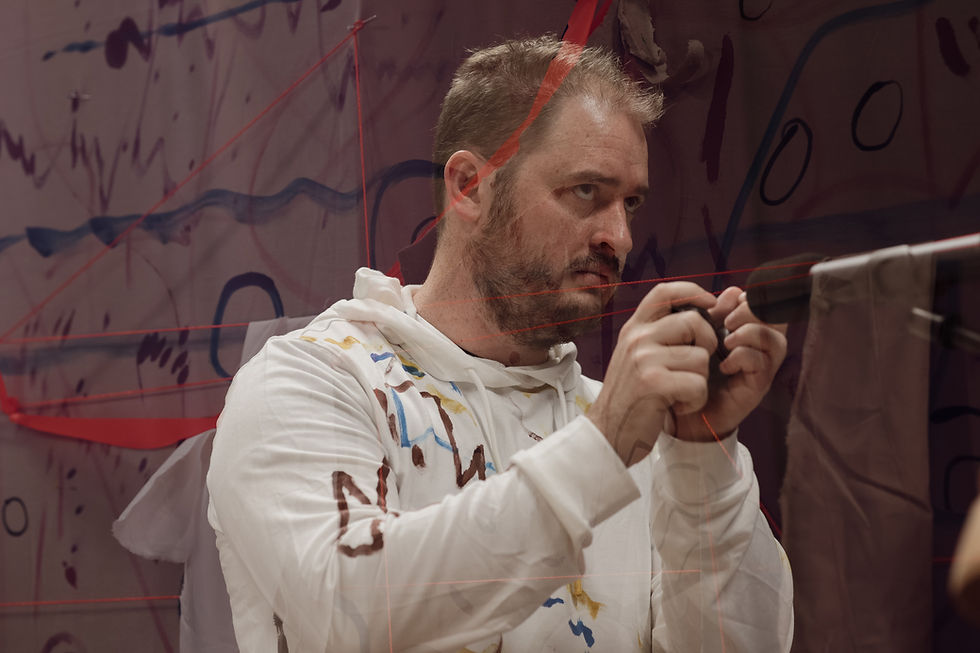
Equally important is making that art collaboratively. Not just because we’re limited by the mediums we specialize in, but because collaboration models the world I want to live in. Another hallmark of our era is isolation—sold to us under names like self-reliance, independence, and resourcefulness. Technology mediates more and more of our interactions. Experiences that were once collective are increasingly individualized, including the making and experiencing of art.
To me, that drift toward isolation is distinctly anti-human. If the COVID-19 lockdown taught me anything, it’s that humans are inherently social creatures. We don’t thrive when left alone for too long. We need connection and collaboration—I’d put it on par with food, water, and shelter.
Beyond the human need for it, collaboration consistently leads to stronger art. The things you bypass when you work alone—differences in perspective, clashing personalities, imperfect processes—often become the source of the most meaningful creative breakthroughs. No single person has all the answers, and working alone limits your ability to see your own blind spots. Creating together reminds me that collaboration improves every human endeavor.
With Vice Versa, we’ve found (and are continually finding) ways to embody these ideas not only in our performances but in our creative process. At our first pilot show in New York, there was an electricity running through all seven of us from the first time we sat in a circle to the moment the lights went down on Sunday night—an unspoken understanding that what we were doing was special. For me, that electricity crystallized what this project could be and what it could represent.
Improvising collaboratively requires two qualities essential to any healthy human relationship: trust and vulnerability. You trust your collaborators to follow you when you make a bold artistic choice, and to show up prepared, open, and ready to connect. Vulnerability emerges when you put that trust into action—when you take a risk and see who follows, or when you choose to follow someone without knowing where it will lead. At Vice Versa, we aren’t just creating art that reflects us and our surroundings; we’re practicing the kind of interconnected, present-tense world we hope to help build.



Comments